Is a Higher BTU Better for an Air Conditioner?
Key Points
- BTU (British Thermal Unit) measures how much heat an air conditioner can remove from a space — the higher the BTU, the larger the area it can cool.
- A higher BTU is not always better — an oversized unit short-cycles, wastes energy, fails to dehumidify properly, and wears out faster.
- The general rule of thumb is 20 BTUs per square foot of living space — but ceiling height, insulation quality, climate, and sun exposure all affect the final number.
- An undersized unit (too few BTUs) is just as problematic — it runs constantly without ever reaching the set temperature, overworking components and shortening lifespan.
- According to the U.S. Department of Energy, an oversized air conditioner will cool a room quickly but leave it feeling clammy because it doesn't run long enough to remove humidity.
- The most accurate way to size an AC is through a Manual J load calculation performed by a licensed HVAC professional — online BTU calculators are a starting point but miss key variables.
- Have questions about which air conditioner matches your room size? Hickory Heating & Cooling, Hickory's AC installation company, can help — call 828-439-0790.
Have questions about which air conditioner matches your room size? Hickory Heating & Cooling, Hickory’s AC installation company, can help; call
828-439-0790.
Many people think that more power is better. That may ring true for many circumstances, but does that principle apply when shopping for an air conditioner to fit a specific room size?
At Hickory Heating & Cooling, we measure the power of an HVAC system in BTUs. Is a higher BTU better for an air conditioner? Let’s dive into this complex topic below.
What Does BTU Mean?
BTU stands for British Thermal Unit — it's the standard measurement of how much heat an air conditioner can remove from the air within a given period of time.
Every air conditioning unit can remove a specific amount of heat from the air, and manufacturers rate this cooling capacity in BTUs. An air conditioner with a higher BTU rating will cool larger spaces efficiently. Systems with a lower BTU count are designed to cool smaller spaces.
Because of this, some homeowners assume that a unit with a higher BTU always offers better cooling speed and efficiency. But HVAC systems are a rare case where more power doesn't mean better performance in every scenario — and choosing the wrong BTU size in either direction leads to real problems.
But HVAC systems are a rare case where more power doesn’t mean better performance in all scenarios.
How to Calculate the Right BTUs per Square Foot
Both air conditioners and heating systems depend on specific measurements to determine how well they'll condition a space. The right BTU count for your unit depends on the size of your space, your local climate, and several home-specific factors:
- Insulation quality — well-insulated homes retain conditioned air better and may need fewer BTUs
- Ceiling height — rooms with high ceilings have more air volume to condition and may require more BTUs than the square footage alone suggests
- Sun exposure — rooms with large south- or west-facing windows gain more heat and may need additional cooling capacity
- Local climate — hotter, more humid climates like the Carolinas require more BTUs than cooler regions for the same square footage
These figures are starting points. According to the U.S. Department of Energy, proper sizing also requires accounting for factors like the number of occupants, kitchen heat loads, and local climate conditions — all of which a professional HVAC technician will factor into their recommendation.
Generally, you need 20 BTUs per square foot of space. For example, a room with 150 square feet needs at least 3,000 BTUs to heat and cool it. Once you factor in your local climate coupled with other factors, your recommended BTU could increase to 5,400.
Other examples of square footage vs. BTU requirements include the following calculations:
- A room with 200 square feet needs up to 6,000 BTUs.
- Rooms with 400 square feet require up to 9,000 BTUs.
- An area of 450 square feet needs up to 10,000 BTUs.
Should You Choose an AC With a Higher BTU?
So, is a higher BTU better for an air conditioner? It is for large spaces — but choosing a system with a BTU rating that exceeds your room's actual needs will cause more harm than good.
If your AC is oversized (too many BTUs), you'll experience:
- Short cycling — the unit cools the room too quickly and shuts off before completing a full cycle, then immediately restarts. This constant on-off pattern rapidly degrades components.
- Poor dehumidification — because the unit short-cycles, it never runs long enough to properly remove moisture from the air. Your home may feel cool but still sticky and uncomfortable.
- Higher energy bills — frequent startups draw significantly more electricity than steady operation, increasing your monthly costs.
- Inaccurate temperature regulation — short cycling leads to uneven temperatures throughout the space, with some areas too cold and others too warm.
- Premature component wear — evaporator coils, motors, and fan components degrade faster under constant short cycling, leading to expensive repairs and a shortened unit lifespan.
According to the U.S. Department of Energy, an oversized air conditioner will cool a room quickly but leave it feeling clammy because it shuts off before adequately removing humidity — one of the most common and misunderstood consequences of incorrect BTU sizing.
How Does a Lower BTU Affect My Comfort?
Choosing a unit with a BTU rating below the recommended range creates the opposite problem — but with many of the same costly consequences.
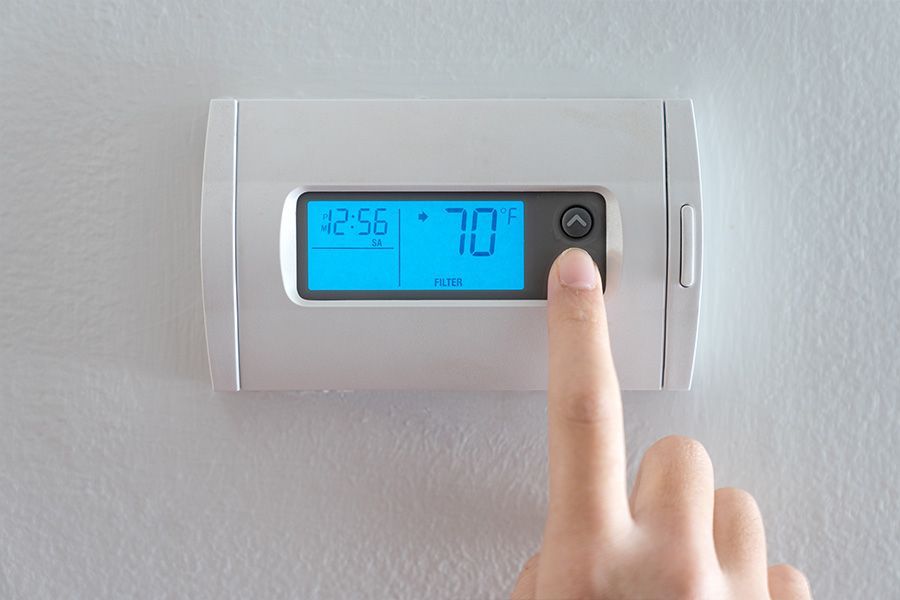
An undersized AC runs continuously, working at full capacity without ever reaching the temperature set on your thermostat.
This causes:
- Continuous operation — the unit never shuts off, driving up energy consumption and wear on every component
- Insufficient cooling — the space never reaches the desired temperature, leaving occupants uncomfortable regardless of the thermostat setting
- Excess humidity — like an oversized unit, an undersized one also struggles with dehumidification because it's operating beyond its design capacity
- Shortened lifespan — components under constant strain wear out faster, requiring more frequent repairs and earlier full replacement
Matching your new unit to the correct BTU range for your specific space prevents these costly, unpredictable issues and ensures consistent comfort year-round.
What Happens If You Ignore BTU Sizing?
Whether your unit is too large or too small, ignoring proper BTU sizing has real financial consequences. Replacements for evaporator coils, motors, and fan components are expensive — and an improperly sized unit will force those repairs sooner than a correctly sized system would.
Beyond repair costs, an incorrectly sized unit also affects your home's indoor air quality. Poor dehumidification — from either short cycling or overworked, undersized units — creates conditions where mold and dust mites thrive, particularly in humid climates like Hickory, NC. Addressing BTU sizing correctly from the start protects both your equipment investment and your home's air quality.
How To Make Sure You Have the Right BTU
How can you be confident you've chosen the right air conditioner for your home?
Online BTU calculators are a helpful starting point — they factor in square footage and local climate to provide a reasonable estimate. However, they typically don't account for ceiling height, insulation quality, sun exposure, or household-specific heat loads that can significantly affect the final BTU requirement.
The most accurate method is a Manual J load calculation — the industry-standard sizing method performed by a licensed HVAC professional. A Manual J assessment catalogs every factor that influences your system's size and BTU requirement, including:
- Room dimensions and ceiling height
- Window size, orientation, and glazing type
- Insulation R-values in walls, attic, and floors
- Local climate data and sun exposure
- Number of occupants and heat-generating appliances
With a proper load calculation, you can be confident that your new system is perfectly matched to your home — not too large, not too small. The team at Hickory Heating & Cooling performs thorough load assessments as part of every AC installation. Call 828-439-0790 to get started.
Let Hickory Heating & Cooling Size and Install Your Air Conditioner
Is a higher BTU better for an air conditioner? In most cases — no. You need an air conditioner with a BTU rating precisely matched to your home's square footage, ceiling height, insulation, and climate conditions. At Hickory Heating & Cooling, our installation experts perform thorough load assessments to help you make a fully informed decision.
Still unsure about how to size an air conditioner? Leave it to our technicians at Hickory Heating & Cooling. Call 828-439-0790 for an estimate.