
Furnace Repair in Valdese, NC
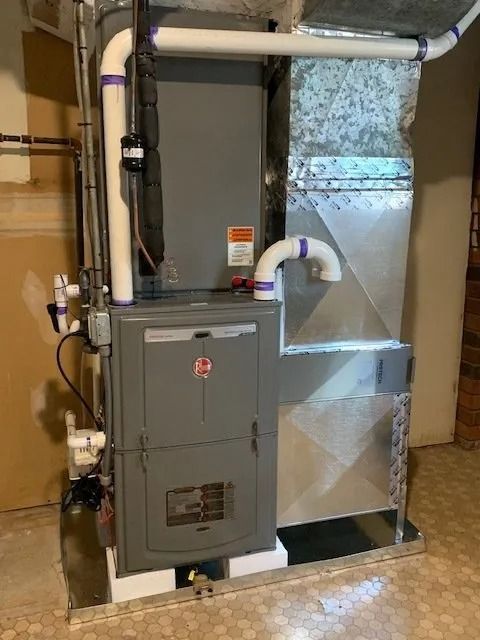
Furnace Warning Signs That Valdese Homeowners Should Act On
Valdese occupies a distinctive position in Burke County, built on and around a series of ridges and hillsides that give the town its character but also make it one of the colder spots in the region during a serious winter event. The elevation advantage that makes for scenic views in October becomes a liability in January when a cold front sweeps through and temperatures on the higher streets drop several degrees below what is recorded at valley-level weather stations. For a furnace already running at less than full capacity, that difference is enough to tip a manageable situation into a no-heat call.
Furnace problems in Valdese tend to build over time rather than appear suddenly. Here are the signs that something is heading in the wrong direction:
- Heat that fades over the course of a cold day
- Furnace cycling on and off without completing a full run
- Rattling or vibrating sounds from the unit or ducts
- Acrid or dusty smell persisting beyond the first few minutes of operation
- One side of the house consistently colder than the other
- Pilot light or ignitor that requires multiple attempts
- Heating bill creeping up with no change in thermostat habits
Any one of these is worth a phone call. A combination of two or more is a strong signal that the system is not going to make it through the winter without professional attention.
CALL NOW!
What Makes Valdese Uniquely Demanding on Heating Equipment
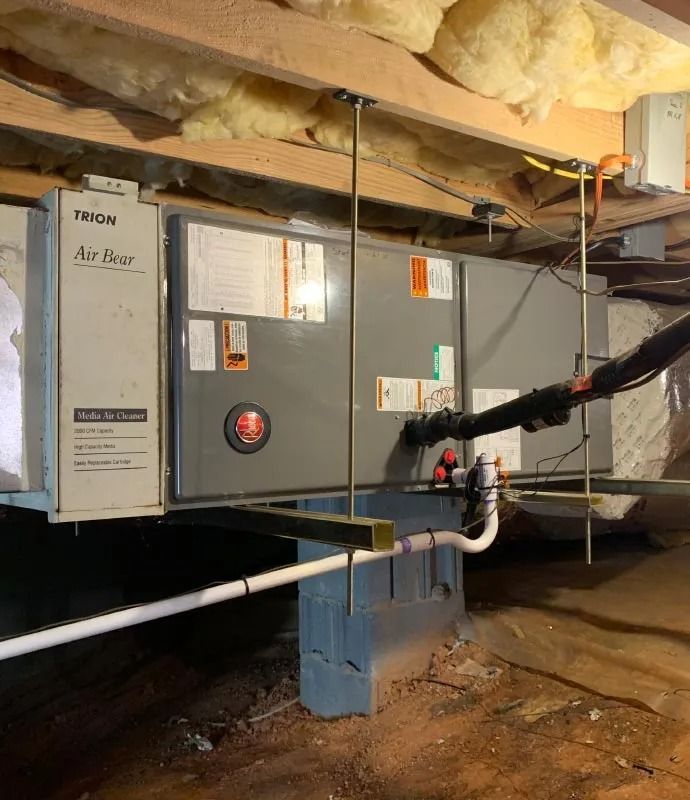
The Waldensian settlers who founded Valdese in the late 1800s built on elevated, wooded terrain, and the residential fabric of the town still reflects that origin. The older neighborhoods on the hillsides above the town center, many of which developed through the early and mid-20th century, sit on lots that slope significantly and feature homes with exposed foundation walls, partial basements, and crawl space configurations that vary from house to house. That variability makes generalization difficult, but the common thread is that cold air has multiple pathways into the mechanical spaces of these homes, and furnaces installed in those spaces deal with ambient conditions that accelerate wear in ways that a furnace in a sealed utility closet simply does not experience.
The ridge-and-valley topography of Valdese also creates microclimatic variation within the town itself. Streets on the upper elevations can be 5 to 8 degrees colder on a calm, clear winter night than streets closer to the valley floor, and that difference compounds over the course of a heating season. Furnaces serving homes on the higher streets run more hours per year, cycle more frequently, and reach the end of their reliable service life sooner than identical systems doing less work in a milder location. It is one of the reasons we pay close attention to system runtime and cycling history when we evaluate a furnace in upper Valdese.
The town's industrial and textile heritage also left a legacy of housing built quickly and practically during the mid-20th century boom years. Many of these homes have never had their duct systems updated or their crawl spaces sealed, and the heat loss through original ductwork in an untempered crawl space on a hillside lot in January is substantial. A furnace working against that kind of distribution loss will always struggle to perform to its rated capacity, regardless of how well the mechanical components are functioning.
What Our Furnace Repair Service Covers
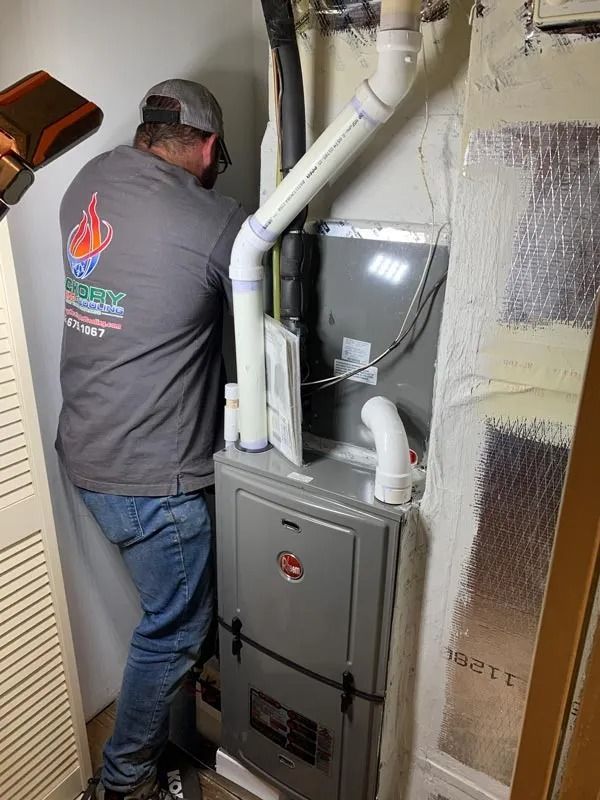
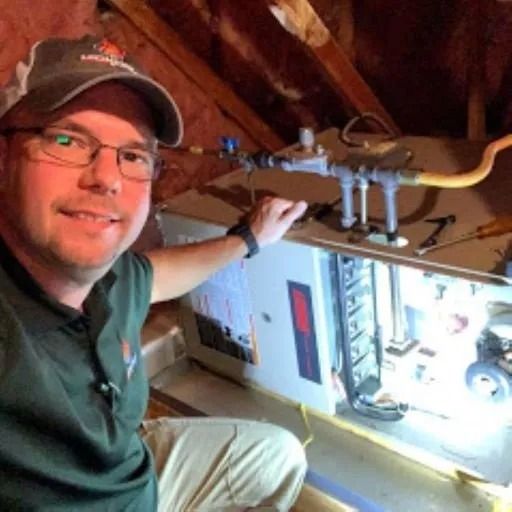
Valdese homes present a range of configurations that require a technician who is comfortable adapting to what they find rather than applying a standard approach. Partial basements, hillside crawl spaces, and mixed duct routing are all common here, and diagnosing a heating problem in one of these homes means understanding the full system before drawing conclusions about any individual component.
We work through ignitor and flame sensor diagnostics, heat exchanger inspections, blower motor and capacitor testing, gas valve and pressure checks, thermostat calibration, and flue and venting evaluations. For homes on upper Valdese streets where higher runtime and cycling frequency are a factor, we pay particular attention to wear indicators on blower motors and heat exchangers that accumulate faster in high-demand systems. Duct airflow and static pressure are also part of our evaluation in any home where the distribution system appears to be contributing to the comfort problem.
Every finding is explained clearly before we recommend any work, and pricing is presented upfront so there are no surprises. We do not treat every Valdese home the same because they are not the same, and the service we provide reflects that.
A Cold Week on the Hill Above Town
Walter called us on a Wednesday morning in early February after several days of what he described as the furnace working constantly but the house never getting above 64 degrees. He lived on one of the higher residential streets on the north side of Valdese, in a two-story home built in the 1950s that had a partial basement where the furnace was installed. The system was a later replacement unit, about 18 years old, but had never been serviced since it was put in.
When our technician arrived and ran through the system, the blower motor was pulling significantly more current than it should, a sign of a bearing that had been wearing for some time. Running at reduced efficiency, the blower was not moving enough air across the heat exchanger to keep the system from hitting its high-limit temperature cutoff repeatedly throughout each cycle. The heat exchanger itself was intact, but the repeated thermal stress from the high-limit trips had left oxidation marks that we documented for future monitoring.
The blower motor was replaced, the system was tested through full cycles at normal operating conditions, and the house was holding temperature properly by afternoon. Walter mentioned that the system had always seemed to run a lot, but he had assumed that was just what it took to heat an older home on a cold hill. In upper Valdese, elevated runtime is normal, but a motor that is fighting a failing bearing is a different problem entirely, and it is the kind of thing that a single maintenance visit would have caught years earlier.
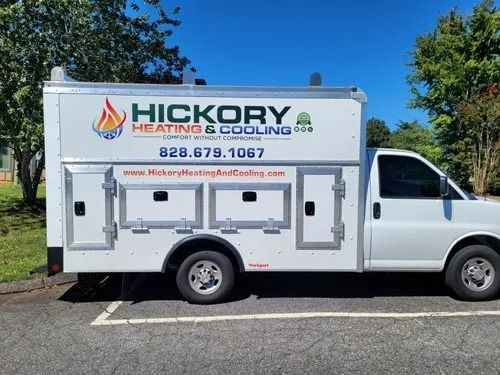
Why Hickory Heating & Cooling Repair LLC Is the Right Call
Valdese has its own character, and homeowners here know the difference between a contractor who understands the local terrain and one who does not. We approach every job in this community with the attention to detail that an older, hillside home demands.
Here is what Valdese homeowners can count on from us:
- Emergency service available
- Honest, upfront pricing
- No-mess, respectful technicians
- Maintenance plans offered
- Energy-efficient solutions
- Personalized system evaluations
- Long-term comfort focus
We take pride in the work we do here and in every community we serve, and we back that up with honesty and follow-through on every visit.