
Furnace Repair in Maiden, NC
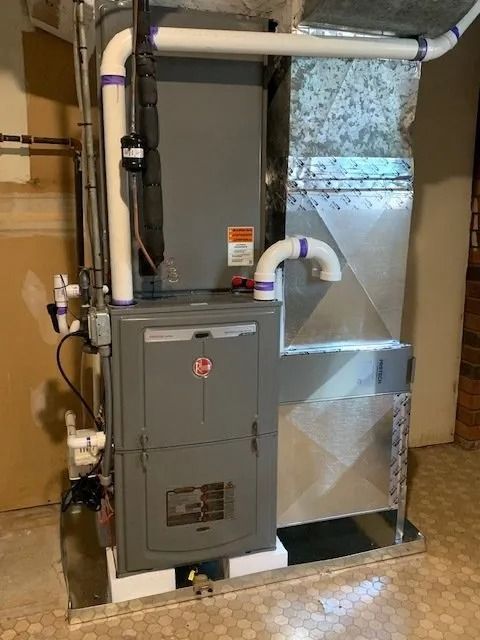
Furnace Symptoms Maiden Homeowners Should Not Wait Out
Maiden sits in the northern end of Lincoln County where the terrain flattens out into the broader Carolina Piedmont, and winters here follow a pattern that catches a lot of homeowners off guard. The area rarely sees prolonged mountain-style cold, but it gets sharp, fast-moving cold fronts in January and February that push overnight lows into the teens and can hold there for several days at a stretch. A heating system that has been getting by on reduced performance through the milder weeks of fall tends to reveal its problems the moment one of those fronts arrives.
The earlier a furnace problem gets diagnosed, the less disruptive and costly it tends to be. These are the symptoms worth calling about:
- Furnace ignites but shuts down within minutes
- Uneven heating between the front and back of the house
- Clicking or grinding noise during startup
- Musty or metallic smell from supply vents
- System runs for hours without hitting thermostat setting
- Unexplained jump in monthly utility costs
- Thermostat unresponsive or reading incorrectly
Waiting on any of these through the holiday stretch or into February is a gamble that rarely pays off. Systems that show multiple symptoms at once are usually closer to a full failure than most homeowners realize.
CALL NOW!
Why Maiden's Growth and Climate Create Unique Heating Challenges
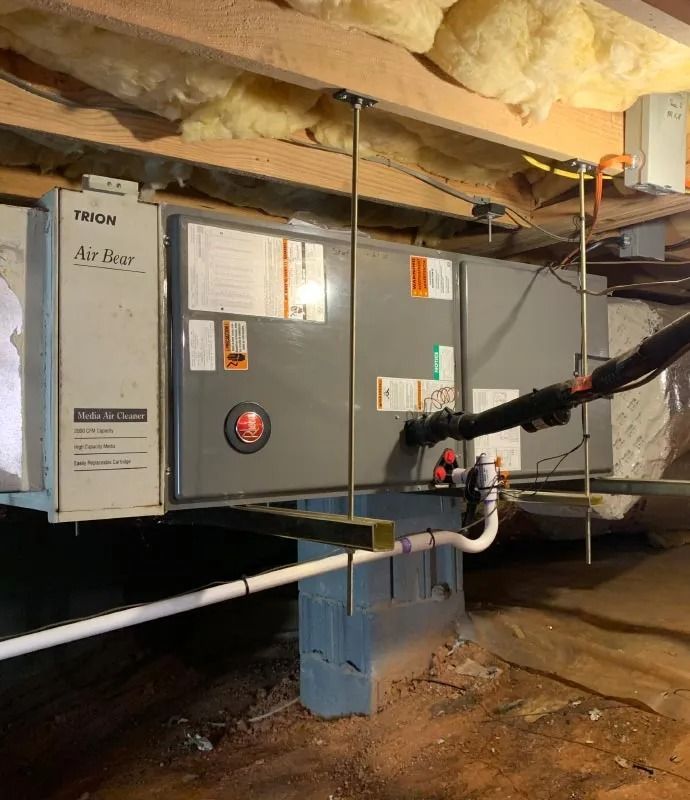
Maiden has grown steadily over the past two decades, and that growth has produced a housing landscape that spans a wide range of ages and construction types within a fairly compact geographic area. The older residential streets near the town center and along the original development corridors off Main Street carry homes built primarily in the 1960s through the 1980s. These homes were constructed during an era when duct sealing was not a priority and crawl space insulation was minimal at best. The ductwork in many of these houses runs through untempered crawl spaces where winter air temperatures can drop well below freezing, and heat loss through those ducts is significant before it ever reaches the living area.
The newer subdivisions that filled in around Maiden during the 2000s and 2010s brought a different kind of challenge. Systems installed in that era are now between 15 and 25 years old, which puts them squarely in the window where original equipment begins failing in ways that compound on each other. A capacitor that weakens reduces blower speed, which causes the heat exchanger to overheat, which trips the high-limit switch, which causes the homeowner to experience a system that seems to run but never heats. Each individual component failure is manageable, but when they stack up in an unserviced system, the result looks more serious than it actually is.
Lincoln County's position in the western Piedmont also means Maiden gets caught in weather patterns that bring a mix of rain, sleet, and freezing rain in late winter, particularly during systems that track up from the southwest. Those events stress exterior flue terminations and can introduce moisture into venting systems that otherwise operate fine, creating intermittent ignition failures that are frustrating to diagnose without knowing the local pattern.
What Our Furnace Repair Service Covers
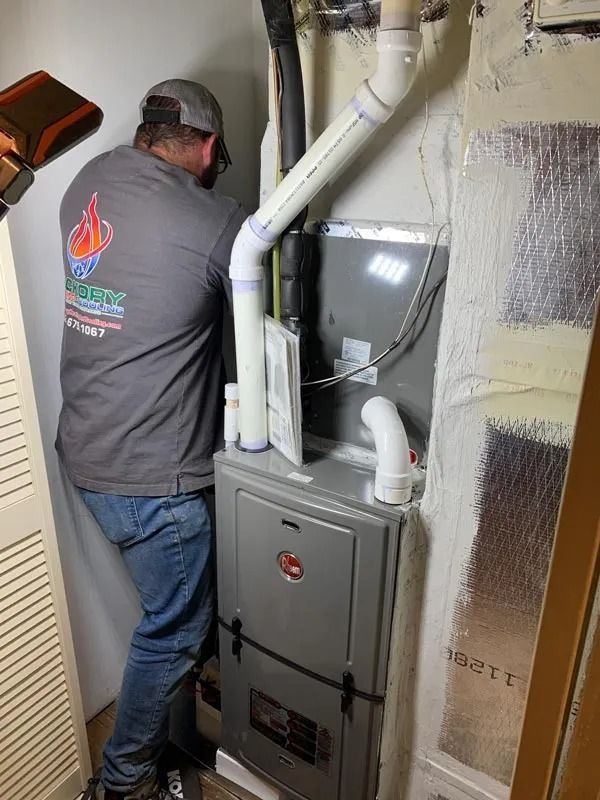
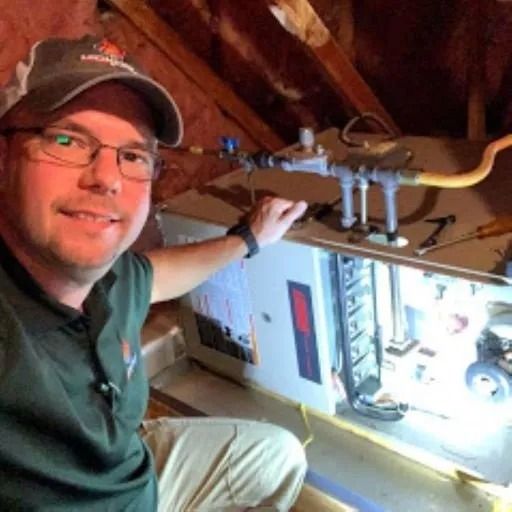
Every service call we take in Maiden begins with a conversation. We want to know what the homeowner has noticed, when it started, whether it is consistent or intermittent, and whether it seems worse during certain weather conditions. That information is part of the diagnostic, and it often points us toward the cause faster than running through a standard checklist would.
From there our technicians work through a complete evaluation of ignitors, flame sensors, heat exchangers, blower motors and capacitors, gas valves, control boards, and flue and venting systems. In older Maiden homes where duct performance is a concern, we also assess static pressure and airflow so homeowners understand whether comfort complaints are being driven by the furnace itself or by losses in the distribution system. Both matter, and a repair that addresses only one while ignoring the other will not deliver the improvement the homeowner is expecting.
Pricing is disclosed before any work begins. We walk through our findings clearly, explain what we are recommending and why, and give homeowners the information they need to make a decision without feeling pressured. If a repair is not the right call for a system of a particular age and condition, we will say so.
How We Helped a Homeowner Near Downtown Maiden Get Through a Cold Snap
Sandra called us on a Friday afternoon in late January after her furnace stopped producing warm air midway through what was turning into one of the colder weeks of the season. She lived in a brick ranch near the downtown area of Maiden, a home built in the early 1970s that had been well maintained but had never had a full HVAC overhaul. The furnace was cycling on and running for extended periods, but the air from the vents was barely above room temperature.
When our technician arrived and pulled the access panels, the flame sensor had accumulated enough oxidation that it was only intermittently confirming a stable flame, causing the burner to cycle off prematurely on roughly half of its ignition attempts. The heat exchanger was also showing surface oxidation consistent with age and the crawl space environment, though no cracking was found. The flame sensor was cleaned and tested through a full cycle sequence, airflow through the heat exchanger was confirmed adequate, and the system was producing proper output within the hour.
Sandra mentioned she had noticed the heat feeling weaker than usual since around Thanksgiving but had assumed it was just the colder weather making the house harder to warm. That kind of flame sensor degradation develops gradually, and in a home like hers where the furnace sits in a crawl space exposed to ground moisture, the oxidation that causes it builds faster than in a climate-controlled mechanical room. Getting ahead of it in the fall would have meant a simple cleaning rather than a service call during the coldest stretch of the year.
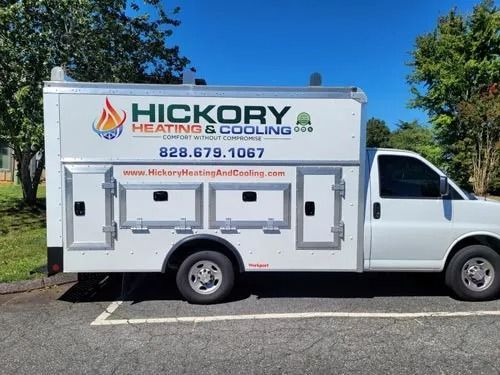
Why Hickory Heating & Cooling Repair LLC Is the Right Call
Maiden is growing, and with that growth comes a mix of homeowners, some in older homes with aging systems and some in newer builds where equipment is hitting a critical age for the first time. We know how to work with both, and we bring the same standard of honesty and care to every job regardless of the neighborhood or the age of the house.
Here is what you can expect when you call us:
- Emergency service available
- Honest, upfront pricing
- No-mess, respectful technicians
- Maintenance plans offered
- Energy-efficient solutions
- Personalized system evaluations
- Long-term comfort focus
We earn trust by doing the job right, explaining what we found, and never recommending work that is not genuinely in the homeowner's interest.