Furnace Repair in Hildebran, NC
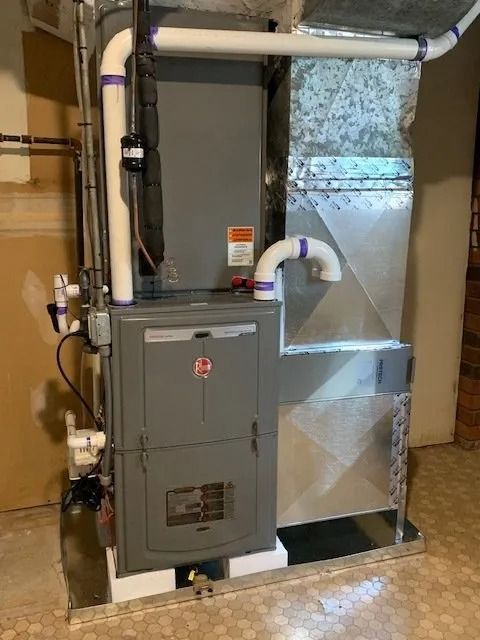
Furnace Problems That Hildebran Homeowners Should Take Seriously
Hildebran is a small community in Burke County sitting at the edge of the Piedmont where the land begins its gradual climb toward the South Mountains. That position matters in winter. Cold air that builds over the highlands to the west tends to funnel down through the valleys and settle into communities at this elevation, and Hildebran homeowners often find that a cold front hits harder and lingers longer than people in lower-lying communities to the east might expect. A furnace that is running at reduced capacity during a stretch like that is not just uncomfortable. It becomes a real problem.
Most furnaces give notice before they fail completely. Watch for these warning signs:
- System short cycles without reaching set temperature
- Loud popping or banging when the heat kicks on
- Warm air from some vents, cold from others
- Strange smell at startup that does not clear quickly
- Thermostat clicking but nothing happening
- Visible condensation or rust around the unit
- Noticeable increase in heating costs mid-season
Taking these seriously early on almost always costs less than waiting. A furnace that shows two or three of these signs in November is far more likely to fail completely on the coldest night of January than one that got a service call in the fall.
CALL NOW!
What Puts Hildebran Homes at Higher Risk for Heating Failures
Burke County's transition zone between the Piedmont and the foothills creates a climate profile that is harder on heating equipment than the county's geography might suggest. Hildebran in particular sits low enough that cold air drainage from the surrounding ridges is a factor on still, clear nights in January and February. Those are the nights when temperatures drop faster and further than forecast, and systems that have been running adequately through milder stretches suddenly cannot keep up.
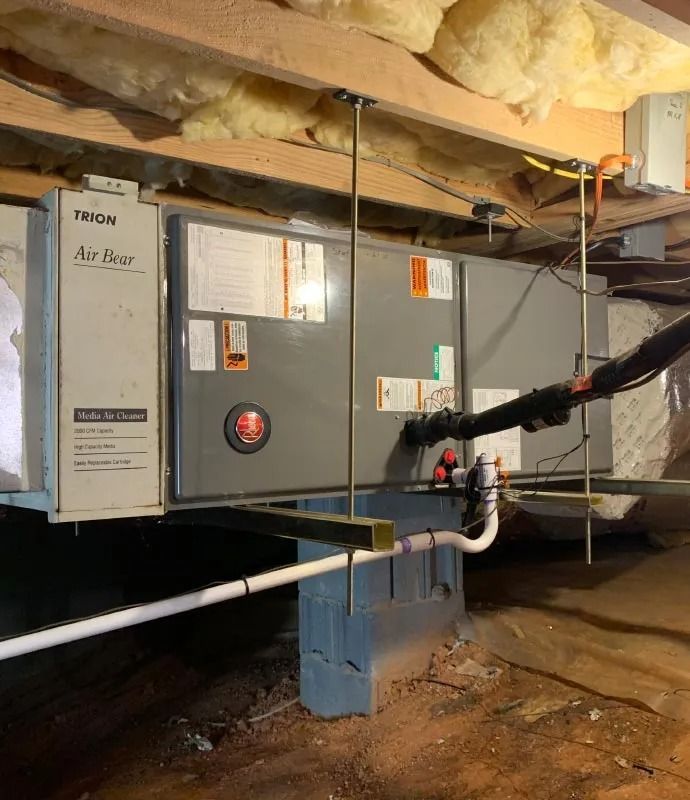
The town's residential character is rooted in its history as a small industrial and farming community, and a meaningful share of the housing stock reflects that. Many of the homes on the older streets near the center of town and out along the rural routes approaching Hildebran were constructed between the 1940s and the 1970s. These are well-built homes by the standards of their era, but they were not designed with energy efficiency or modern duct sealing in mind. Unsealed duct systems running through unheated crawl spaces are the norm rather than the exception, and the result is a furnace that is doing far more work than it should just to compensate for the heat being lost in transit.
Hildebran's rural-edge character also means a higher proportion of homes use propane rather than natural gas, and propane systems have their own specific failure patterns. Pressure regulators, gas valves, and ignition components on propane systems behave differently under temperature stress than their natural gas counterparts, and they require a technician who knows what to look for and where problems tend to develop in that type of setup.
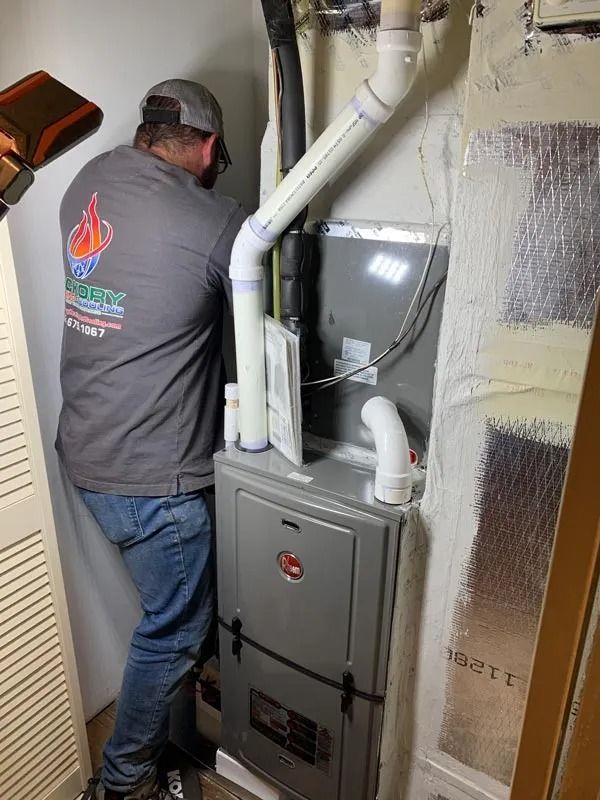
What Our Furnace Repair Service Covers
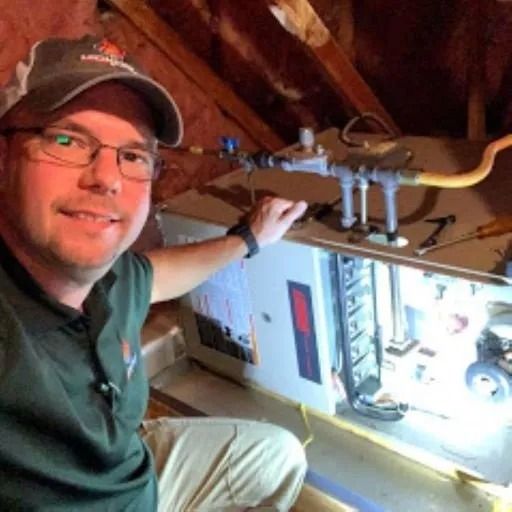
We come to every job in Hildebran prepared to deal with what is actually there, not what we expect to find. Older homes in this part of Burke County require a different kind of attention than a newer subdivision build, and we adjust our approach accordingly. That means slowing down on the diagnosis end rather than rushing to a part replacement, because in a home with a 40-year-old duct system and a 15-year-old furnace, the presenting symptom is rarely the only thing going on.
Our repair work covers the full range of furnace components: ignitors and flame sensors, heat exchangers, blower motors and capacitors, gas valves, control boards, and flue and venting systems. For homes using propane, we include a pressure and regulator check as part of every visit. We also assess duct airflow and static pressure in older homes where distribution losses are likely contributing to comfort complaints.
Pricing is shared before any work starts, and we take the time to explain what we found in plain terms. If the repair makes sense, we will tell you why. If the system is at a point where continued repairs are not in your best financial interest, we will tell you that too.
A January Morning in a Glen Alpine Road Home
Patricia called us on a Tuesday morning in mid-January after her propane furnace had stopped producing heat the previous evening. She lived in a farmhouse-style home on a rural lot off Glen Alpine Road, a stretch of Burke County that sits at a slightly higher elevation than Hildebran's town center and feels every degree of a cold night. By the time she called, the house was down to 54 degrees and her propane tank was showing a full reading, so she knew it was not a supply issue.
When our technician arrived and ran through the system, the problem turned out to be a failed pressure regulator at the tank that had seized in cold temperatures overnight. The furnace was calling for heat, the ignitor was functioning, but the gas was not moving past the regulator at the pressure the system needed to fire. The regulator was replaced, the system was tested through several complete cycles, and the house was warming by mid-morning.
Patricia mentioned she had not had the furnace serviced in several years and had no idea the regulator was even a component that could fail. It is one of the things we see specifically in propane systems in rural Burke County, particularly after a hard freeze, and it is something a fall maintenance visit would have flagged before it became a no-heat situation on one of the coldest mornings of the year.
Why Hickory Heating & Cooling Repair LLC Is the Right Call
Hildebran is a community where people know their neighbors and expect the same kind of straightforward treatment from a contractor that they would from anyone else in their circle. That is exactly the standard we hold ourselves to on every job.
Here is what Hildebran homeowners can expect when they call us:
- Emergency service available
- Honest, upfront pricing
- No-mess, respectful technicians
- Maintenance plans offered
- Energy-efficient solutions
- Personalized system evaluations
- Long-term comfort focus
We know how to work in older homes, we understand the specific demands of this part of Burke County, and we will never recommend something you do not actually need.