Furnace Repair in Claremont, NC
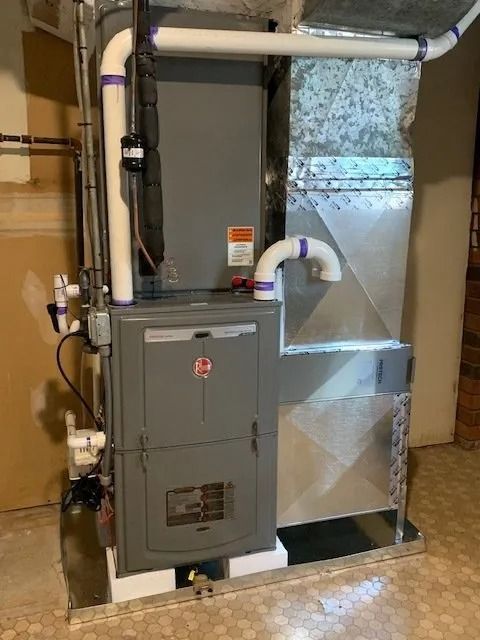
How to Tell Your Furnace Is Headed for Trouble
Claremont may be a small community, but the winters here are nothing to take lightly. Sitting in the eastern end of Catawba County near the shores of Lake Hickory, the area sees cold air settle in quickly during January cold fronts, and homes without a reliable furnace feel it fast. The challenge for a lot of local homeowners is that furnace problems rarely announce themselves all at once. They build gradually, and by the time the system stops working, the signs have usually been there for weeks.
If your furnace is showing any of the following, it is time to call:
- Short cycling or frequent shutoffs
- Rooms that will not come up to temperature
- Loud popping or metal-on-metal sounds
- Musty or burning smell from vents
- Thermostat unresponsive or inconsistent
- Yellow burner flame instead of blue
- Heating bills rising without a clear reason
Do not wait until the system quits entirely. A furnace that is struggling in November is a furnace that is likely to fail in January, when you need it most.
CALL NOW!
Why Claremont Homes Are Hard on Heating Systems
Claremont's location near Lake Hickory introduces a moisture dynamic that most homeowners do not think about until something goes wrong. Proximity to the lake means ambient humidity stays elevated even through the cooler months, and that persistent dampness works its way into crawl spaces, utility closets, and mechanical rooms where furnaces live. Over time, that environment corrodes burner components and gas valve connections in ways that are hard to see until the system stops performing.
The community also carries a mix of housing ages that creates its own set of challenges. Properties along the older streets near Highway 16 and the established neighborhoods closer to the lake were largely built in the 1970s through the early 1990s. Many of those homes have never had a full HVAC system update, meaning the ductwork, flue venting, and furnace components are all aging together. When one part fails, it often reveals stress on the others that has been quietly building for years.
Claremont also sits in a transitional climate zone where freeze-thaw cycles in late winter can be more frequent than communities further inland. That repeated expansion and contraction is particularly hard on heat exchangers, which develop small stress fractures over time that grow into genuine safety and performance issues if they are not caught during routine service.
What Our Furnace Repair Service Covers
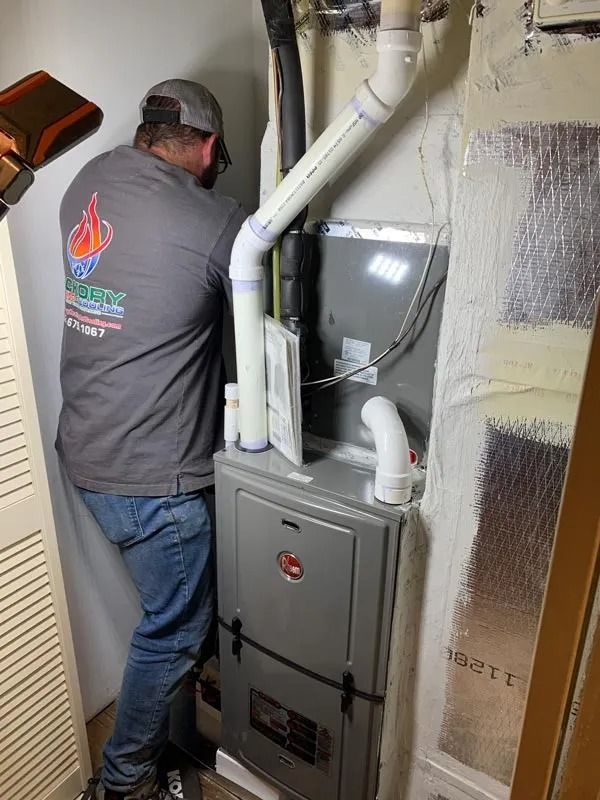
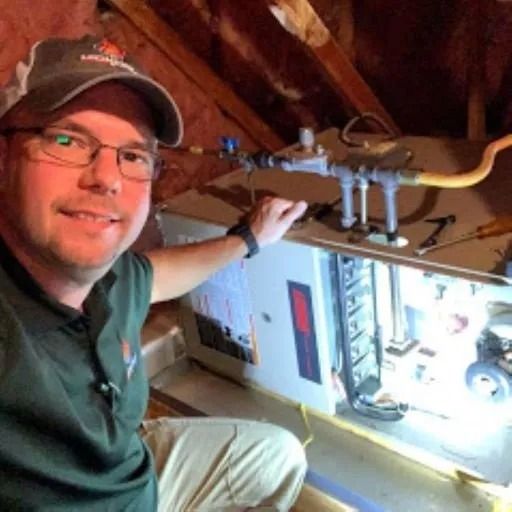
We do not show up to a service call in Claremont with a predetermined answer. Every visit starts with a full system evaluation so we understand exactly what is causing the problem before we recommend any work. That approach takes a little more time upfront, but it means the repair we do actually solves the issue rather than masking it temporarily.
Our technicians work through ignitor and flame sensor diagnostics, heat exchanger inspections, blower motor testing and repair, gas valve checks, thermostat calibration, and flue and venting assessments. For older homes in Claremont where the ductwork may be undersized or damaged, we also evaluate airflow as part of the visit, since a well-repaired furnace still underperforms if the distribution system is working against it.
Every customer gets a clear explanation of what we found and what we recommend before any work begins. Pricing is upfront and firm, and we never push repairs or replacements that are not genuinely in the homeowner's best interest.
No Heat on a Cold Night Near Lake Hickory
Carol called us on a Sunday evening in late January after her furnace stopped producing heat sometime during the afternoon. By the time she reached out, her home in a lakeside neighborhood off Catawba Valley Boulevard had dropped into the mid-50s, and the system was doing nothing but cycling on and off every few minutes without ever igniting properly.
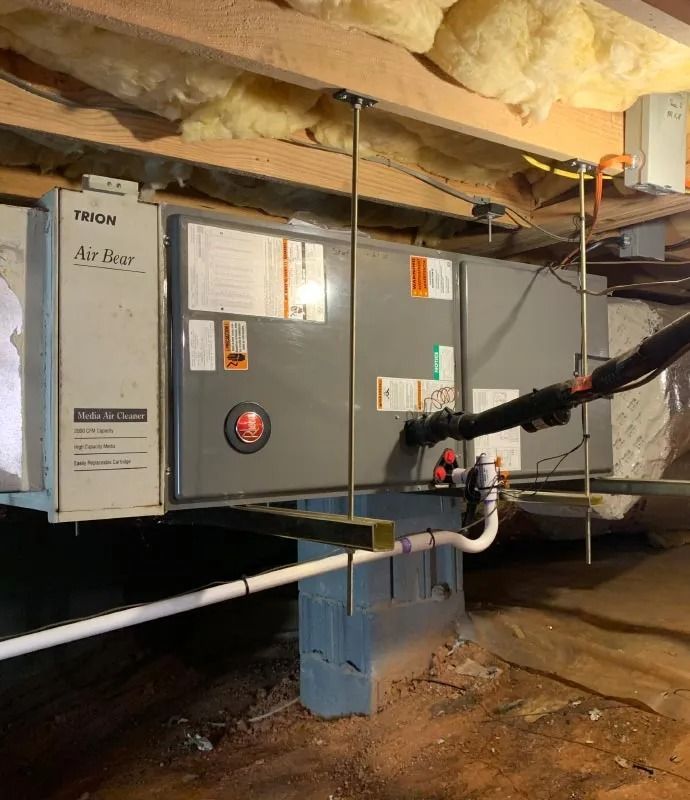
Our technician was on site the next morning. The diagnosis pointed to a failed ignitor that had been degrading for some time, compounded by a flame sensor coated with enough residue that even when ignition briefly occurred, the system could not confirm a stable flame and would shut back down as a safety measure. Both components were replaced, the burner cycle was tested through several complete sequences, and the system came back to full operation well before noon.
Carol mentioned that she had noticed the furnace acting a little rough at startup for most of the fall but had assumed it was just the system adjusting to cooler weather. That kind of gradual decline is exactly what we see in homes near the lake, where moisture-driven wear on ignition components happens slowly and quietly. A fall tune-up would likely have caught both issues before they combined into a no-heat call on a winter Sunday.
Why Hickory Heating & Cooling Repair LLC Is the Right Call
Claremont is a close-knit community and word travels fast when a contractor does right by someone, and just as fast when they do not. We take that seriously. Every job we run here is handled with the same professionalism and transparency we bring everywhere else in the area.
Here is what Claremont homeowners can count on from us:
- Emergency service available
- Honest, upfront pricing
- No-mess, respectful technicians
- Maintenance plans offered
- Energy-efficient solutions
- Personalized system evaluations
- Long-term comfort focus
We are not here for a one-time transaction. We want to be the company you call every time something comes up with your home's heating and cooling, and we earn that by doing the job right the first time.